## SOC:1030 | Contemporary Social Problems Spring 202 | SOC1030Sp25 SOC1030Sp25-W04-2025-02-12 Levi Sands, MA, University of Iowa (levi-sands@uiowa.edu) - 0A01 - Wed 4:30 PM - 5:20 PM - NH 205 - 0A02 - Wed 5:30 PM - 6:20 PM - NH 103 - 0A03 - Wed 3:30 PM - 4:20 PM - NH 205
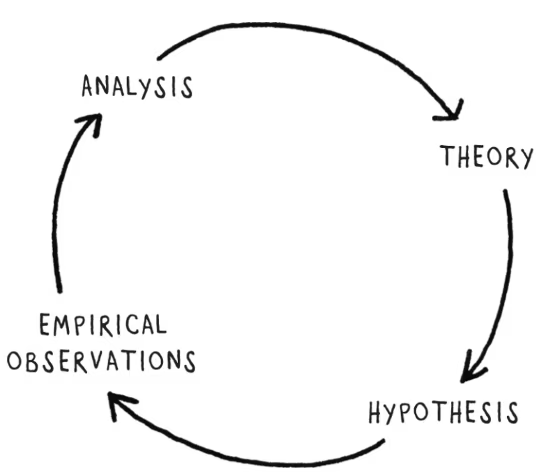
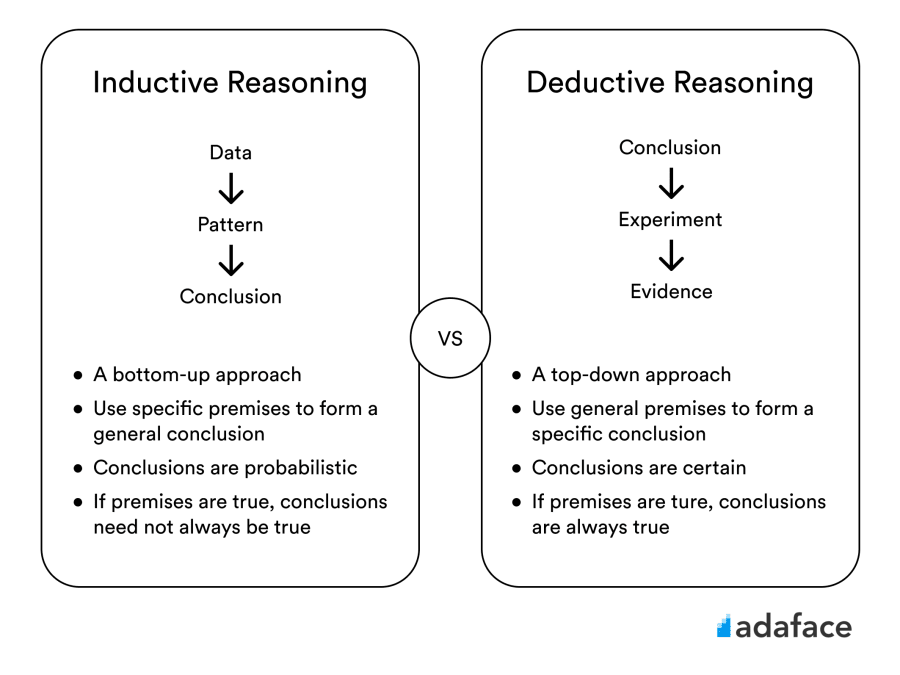
## Research Methods 101 - A research approach often starts with a theory, forms a hypothesis, makes empirical observations, and then analyze the data to confirm, reject or modify the hypothesis - **Theory**: a systematic, generalized model of how some aspect of the world works. - **Hypothesis**: a specific, clear, and testable statement that predicts a possible outcome
## Sociological Methodology - Level of analysis (squishy boundaries) - **Micro** - Usually just the individual or small numbers of people - Example: "How should I behave?" - **Meso** - Usually about groups of people - Example: "Resisting internalizing stigmatizing interactions/messages" - **Macro** - Usually about large groups - Example: "Economic and political structures" - Example: Self-Stigma and the Social Interactions of Mental Health Patients (Harkness and Kroska 2019)
## Research Methods 101 - **Quantitative methods**: seek to obtain information about the social world that is already in or can be converted to numeric form; - Surveys and Questionnaires - Experiments - Statistical analysis - Social network analysis - ... - **Qualitative methods**: attempt to collect information about the social world that cannot be readily converted to numeric form. - In-depth Interviews (a deep exploration of individual perspectives, experiences, and feelings ) - Focus Groups (involves gathering a small group of people to discuss a specific topic or set of issues ) - Ethnography (data collection through observations, interaction, and interviews) - Content analysis (systematically counting and categorizing the content of texts) - ...
## Some challenges in research methods - Causality Versus Correlation - Survey research and biases - Experimentation
## Causality Versus Correlation - **Correlation** (or association) when two variables tend to track each other: - Income and health are correlated. - **Causality** is the notion that a change in one factor results in a corresponding change in another

Causality Versus Correlation
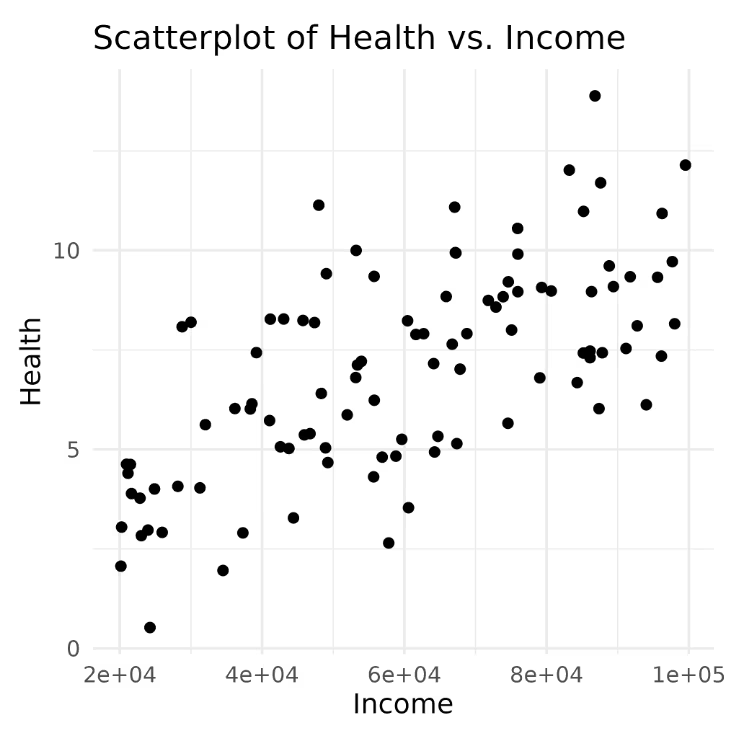
Discuss in your groups, what could the causation be?

Causality Versus Correlation

Causality Versus Correlation

Causality Versus Correlation
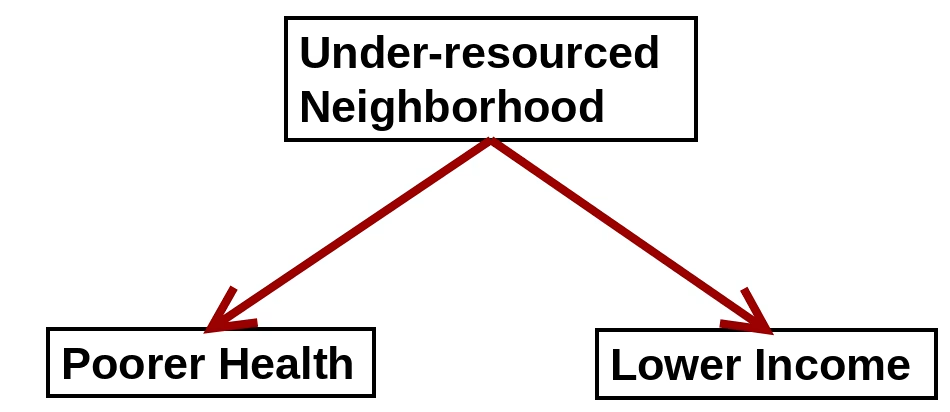
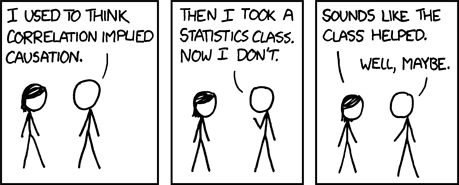
Correlation does not imply causation!
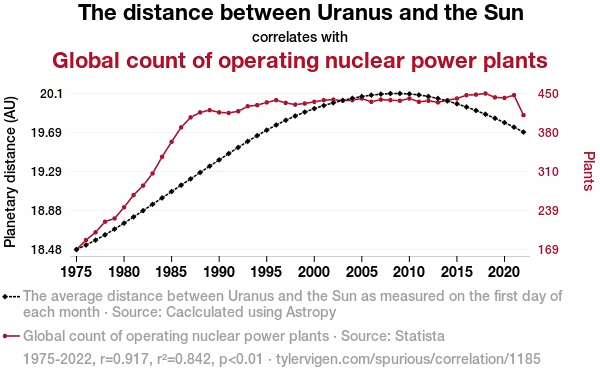
AI explanation: As Uranus moved further away, its gaseous emissions created a chain reaction of laughter among humans. This laughter somehow led to an increase in the construction of nuclear power plants as a misguided attempt to harness this newfound comedic energy. It turns out that Uranus's departure really did prompt a lot of "Uranus jokes," leading to a strange and unexpected boom in the nuclear power industry. I guess you could say that Uranus's influence on Earth's sense of humor was truly out of this world!

Correlation does not imply causation!
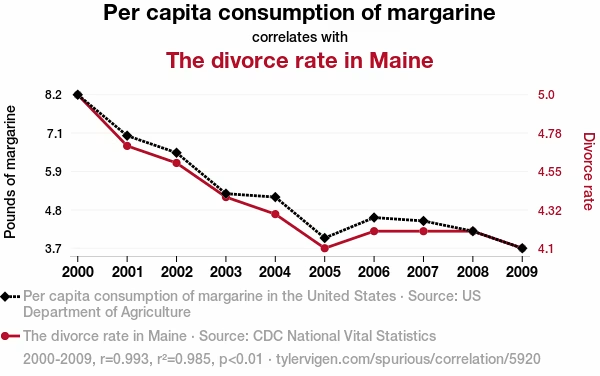
AI explanation: Perhaps as people used less margarine, they became less slippery in their relationships. The lack of artificial spread may have kept the couples from buttering each other up, leading to a decrease in overall marital strife. That's the reality when you can't believe it's not butter - it's a recipe for marital success. Alternatively, it could be that as the margarine consumption decreased, so did the overall slickness in the state, leading to fewer instances of partners feeling like they couldn't grip the marriage.
## What are the solutions to the “Cause or Coincidence?” issue? - Experimental Studies - Randomly assign participants to treatment and control groups to directly observe the effects of the treatment. - Longitudinal Studies - Follow and observe the same subjects over time - Statistical Techniques - Conceptual understanding of the problems
## Sociological Methodology - Survey Research and Samples - Experimentation - Observation (field research) - In-Depth Interviews - Existing data
## Survey Research and Samples - Survey, an ordered series of questions intended to elicit information from respondents - Selection bias can enter your samples. - Representative sample of US population - General Social Survey (GSS) run by the National Opinion Research Center - Repeated cross-sectional survey
## Discuss: Survey vs Survey - Survey A: National Energy Policy Survey - Conducted by: A non-partisan research institute - Method: Random sampling via telephone interviews across a broad demographic spectrum - Question Example: "Do you agree that the government should invest more in renewable energy sources, such as solar and wind power, even if it means slightly higher taxes?" - Survey B: Environmental Advocacy Group Poll - Conducted by: An environmental advocacy group known for promoting green energy - Method: Online survey distributed through social media channels and environmental newsletters - Question Example: "Do you support the transition to renewable energy sources to combat climate change and protect the environment?"
## Potential source of survey bias - Self-Selection Bias/Sampling Bias: The method of distribution likely reaches an audience already interested in or supportive of environmental causes. - Social Desirability Bias: The way the question is phrased might lead respondents to answer in a way that they believe is socially acceptable or favorable - Bias in Question Wording: Subtle changes in language, such as the use of 'assist' versus 'help' or 'climate change' versus 'global warming,' can lead to different interpretations. - ...
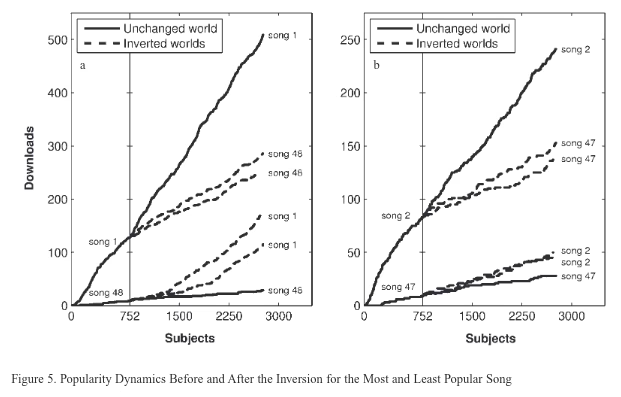
## Experimentation - Experimental design involves two groups: an **experimental group** that is exposed to a particular intervention or condition, and a **control group** that is not, and then compare outcomes across these groups. - **Experimental Group** - exposed to a particular intervention or condition - **Control Group** - not exposed to the experimental treatment - Music Lab Experiment: Popularity of the songs was inverted (Salganik and Watts 2008)
## Other Methods - Observation (field research) - Example: Khan, Shamus Rahman. 2010. Privilege: The Making of an Adolescent Elite at St. Paul's School. Vol. 65. Princeton University Press. - In-Depth Interviews - Example: Reich, Jennifer A. 2020. “Vaccine Refusal and Pharmaceutical Acquiescence: Parental Control and Ambivalence in Managing Children's Health.” American Sociological Review 85(1):106–27. doi: 10.1177/0003122419899604. - Existing data (secondary data analysis and/or content analysis) - Example: Sands, Levi, and Julie Sands. 2024.“Marital Cold War: How Ex-Mormons Navigate Mixed-Faith Marriages after Disaffiliation.” Presented at the 2024 Midwest Sociological Society Annual Meeting, April 5, Des Moines, Iowa.
## Group Discussion - As a group discuss the claims below, do you support the claim or not? Why so? - Areas with a high density of fast-food restaurants have higher obesity rates. Do fast-food restaurants cause obesity? - Children from single-parent households statistically perform worse academically than those from two-parent families. Is the single-parent household structure to blame? - Companies with greater gender diversity among their leadership are often more profitable. Does gender diversity cause increased profitability? - For ONE of these claims how would you test it? - On ICON (Access Code: MUK5NV): - Briefly summarize your support (or not) for one claim - Briefly explain which methods you would use to test the claim your group discussed
## Equality Terms to Review - Know how to tell these apart - Equality of opportunity - Equality of condition - Equality of outcome
## Two Types of Inequality - Gradational inequality - Relational inequality
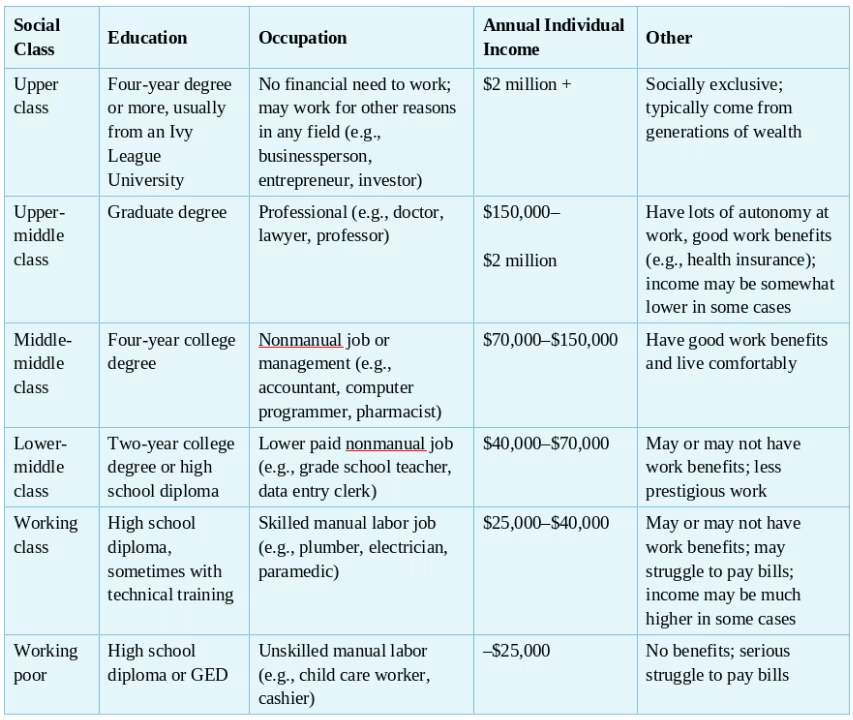
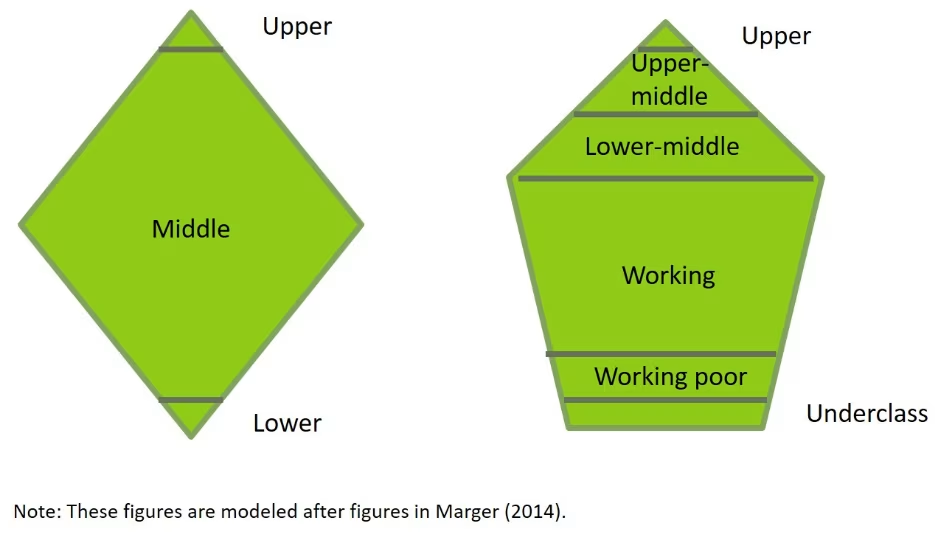
## Gradational inequality - Jean-Jacques Rousseau - Two forms of social inequality: - **Physical (or natural)**, which “consists in a difference of age, health, bodily strength, and the qualities of the mind or the soul.” - **Social**, which “depends on a kind of conventional inequality and is established or at least authorized by the consent of men, …, consists of the different privileges which some men enjoy to the prejudice of others, such as that of being more rich, more honored, more powerful, or even in a position to exact obedience.” (Discourse on Inequality) - **Gradational inequality** = a ladder or scale of inequality: upper, upper middle, middle, lower middle, lower
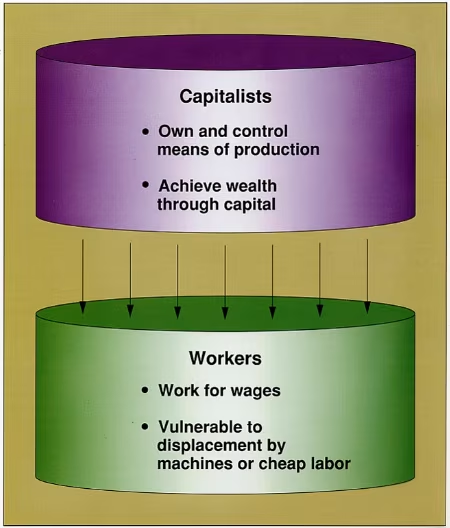
## Relational inequality - Georg Friedrich Hegel and Karl Marx - Master-slave dialectic / opposing social classes - **Relational inequality** = a structure of social relations that bind together the advantaged and disadvantaged: - A position is relational in a sense that to describe that particular positions are also to describe how it is connected to other positions. - Capitalists and workers; lords and serfs.
## Views of inequality - Gradational inequality = a ladder or scale of inequality: upper, upper middle, middle, lower middle, lower - Relational inequality = a structure of social relations that bind together the advantaged and disadvantaged - (less important) Inequality is a necessary condition of abundance (Thomas Malthus)
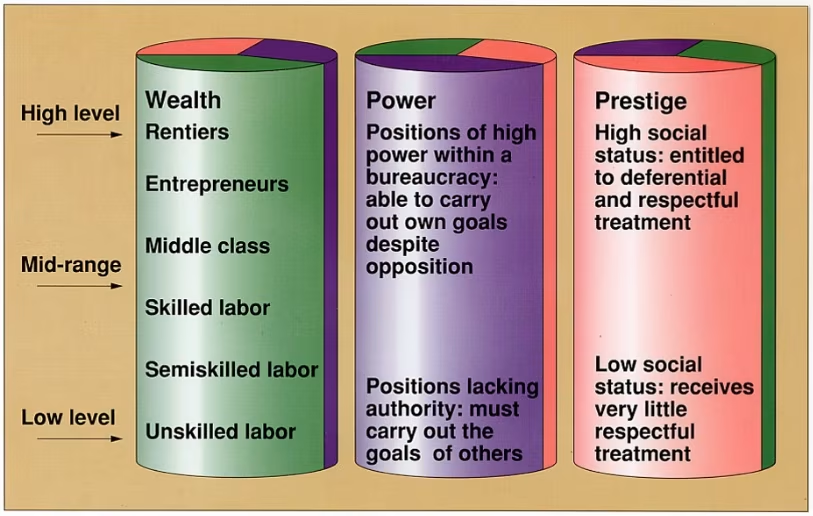
## Class: Marx vs Weber - Karl Marx and conflict theory - Economic Foundation, class division and class conflict - Max Weber - Power, Prestige, and Wealth - Power - The chance of an individual or group to realize their will in social action, even when faced with opposition from others - Prestige - The respect or standing that an individual obtains through appointment or accomplishment - Wealth - Property, Income - Education - Educational attainment
## What class do you belong to? - Figure out what class you belong to NOW - Figure out what class your family belongs to (your parents as of the time that you finished high school) - Figure out what class you will be if you obtain the job you plan on for after your time at Iowa

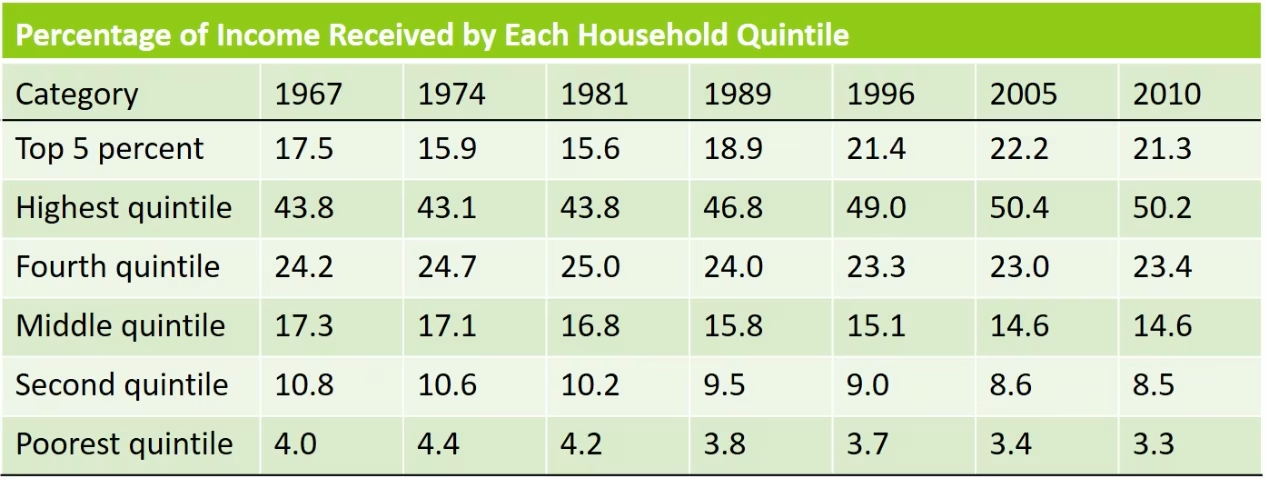
US Context: Perception vs Reality
US Context: Perception vs Reality
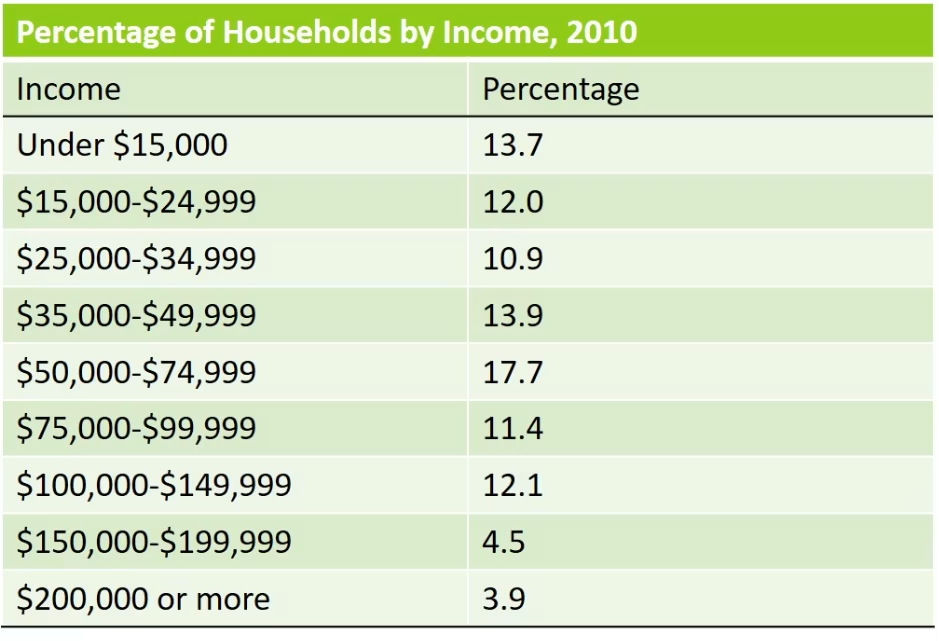
US Context: Perception vs Reality
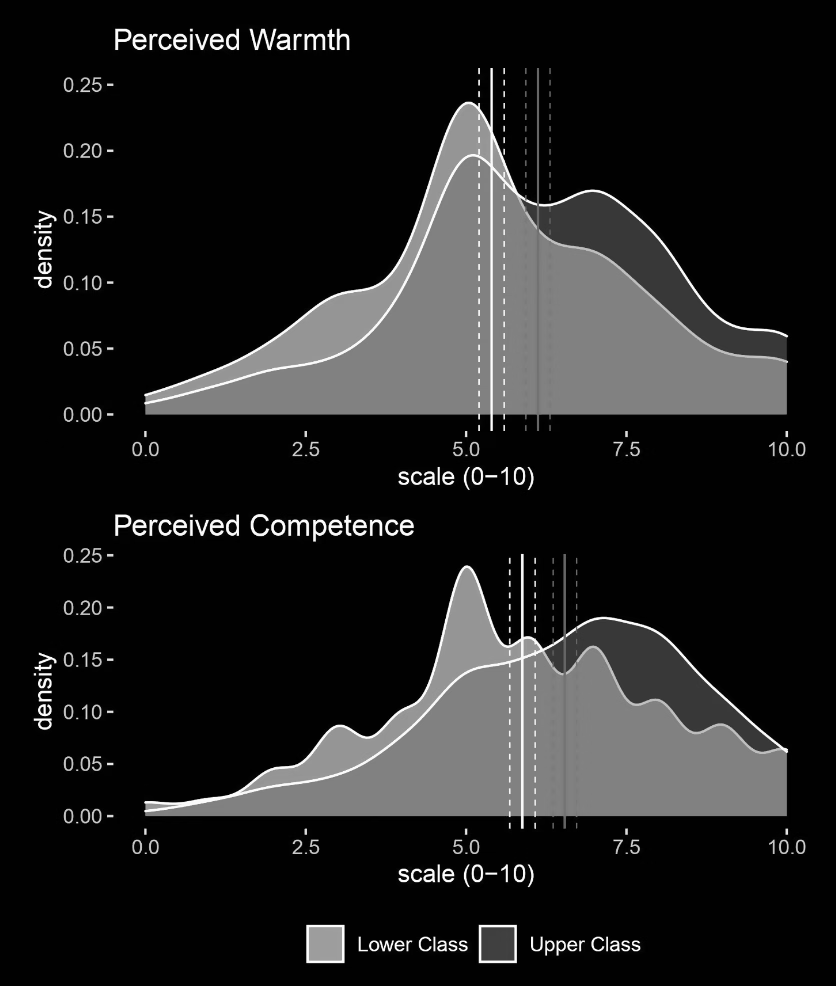
## Social Class and Culture - Prof. Christy Glass, Yale Wine - eBird and birding competitions - ["The authors show that as law schools compete to improve their rankings, their programs become more homogenized and less accessible to non-traditional students."](https://www.russellsage.org/engines-anxiety) (Espeland and Sauder 2016) - Survey Experiment: respondents rated two candidates: varied the University, High School, Work Experience, Description on Social Media (Galos 2024) - "I show that subjects favour the upper-class-signalling candidate over the lower-class-signalling candidate and that perceived competence and perceived warmth are two channels through which class-based discrimination may occur." (Galos 2024)

Khan, Shamus Rahman. 2010. Privilege: The Making of an Adolescent Elite at St. Paul's School. Vol. 65. Princeton University Press.

I'll be adding this book to the book list.

References

Andersen, Margaret L., Howard Francis Taylor, and Kim A. Logio. 2017. Sociology: The Essentials. 9th ed. Wadsworth Publishing.

Espeland, Wendy Nelson, and Michael Sauder. 2016. Engines of Anxiety: Academic Rankings, Reputation, and Accountability. New York: Russell Sage Foundation.

Galos, Diana Roxana. 2024. “Social Media and Hiring: A Survey Experiment on Discrimination Based on Online Social Class Cues.” European Sociological Review 40(1):116-28. doi: 10.1093/esr/jcad012.

Harkness, Sarah, and Amy Kroska. 2019. “Self-Stigma and the Social Interactions of Mental Health Patients.” Pp. 79-94 in.

Salganik, Matthew J., and Duncan J. Watts. 2008. “Leading the Herd Astray: An Experimental Study of Self-Fulfilling Prophecies in an Artificial Cultural Market.” Social Psychology Quarterly 71(4):338–55. doi: 10.1177/019027250807100404.

Themes

reveal.js comes with a few themes built in:
Beige - Black Contrast - Black (default) - Blood - Dracula
League - Moon - Night - Serif - Simple
Sky - Solarized - White Contrast Compact Verbatim Headers - White Contrast - White

Themes created by Levi Sands
Udub - USU - Uiowa - Gonzaga - EWU